For some reasons I missed the live cast of the launch and landing that SpaceX did.
Here’s the deal in short. They launched the Falcon 9 rocket into space, passed the maximum Q at which aerodynamic pressure is at its highest and could cause serious trouble to any rocket.
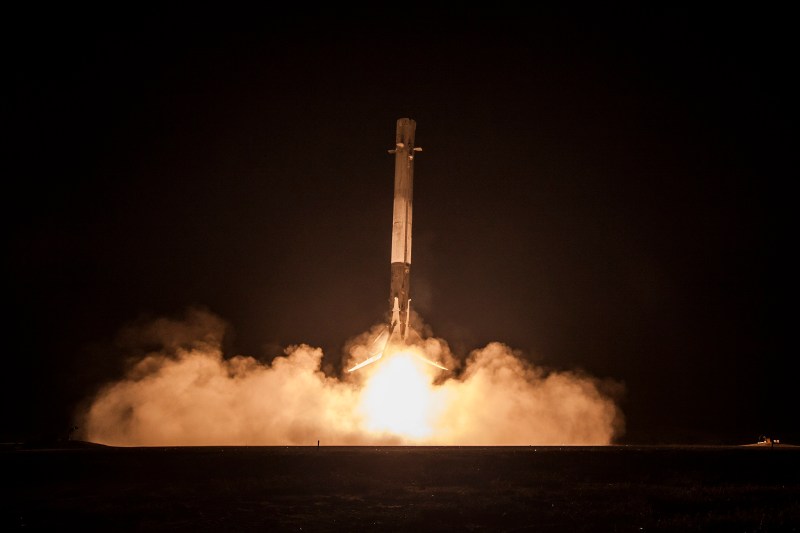
Following the detachment of the stage 1 booster and the ignition of the 2nd stage booster, and this is the phenomenal feat they did, the stage 1 part made an acrobatic flip, made the appropriate adjustments to put itself on the right trajectory to return to land and actually do a(n) (experimental) landing (occurs at 32m 20s). The goal of this is pretty obvious, a reusable rocket.
The second stage part continued into outer space to release 6 deployments with a total of 11 satellites (36m 46s). Not one but six deployments. They have achieved not a single feat but several. Even the live cast on-board the Falcon 9 and during the satellite deployment is a feat by itself.
All this happened in under 20 minutes not counting preparation time of course.
Congrats SpaceX.
Below is the full cast. The first video starts at the launching event(22m 10s) and the second video starts at the landing of the 1st stage rocket followed by the 6 deployments.
Mars is a cold and barren desert today, but scientists think that in the ancient past it was warm and wet. The loss of the early Martian atmosphere may have led to this dramatic change, and one of the prime suspects is the solar wind. Unlike Earth, Mars lacks a global magnetic field to deflect the stream of charged particles continuously blowing off the Sun. Instead, the solar wind crashes into the Mars upper atmosphere and can accelerate ions into space. Now, for the first time, NASA’s MAVEN spacecraft has observed this process in action – by measuring the speed and direction of ions escaping from Mars. This data visualization compares simulations of the solar wind and Mars atmospheric escape with new measurements taken by MAVEN.

 Ibrahim El Merehbi
You must be logged in to post a comment.