Breaking News: SpaceX Falcon 9 rocket explodes 2 minutes after launch

Standard

The Falcon 9 rocket launched earlier today to supply the International Space Station with food and supplied.

At launch a propulsion anamoly was detected and the rocket, at highest pressure, exploded 2 minutes after launch. Footage of the incident is below:

https://youtu.be/2K030HRTutU

https://youtu.be/usg5OOrKXX4

https://youtu.be/ZeiBFtkrZEw?t=21m1s

Watch the Solar Eclipse LIVE

Link

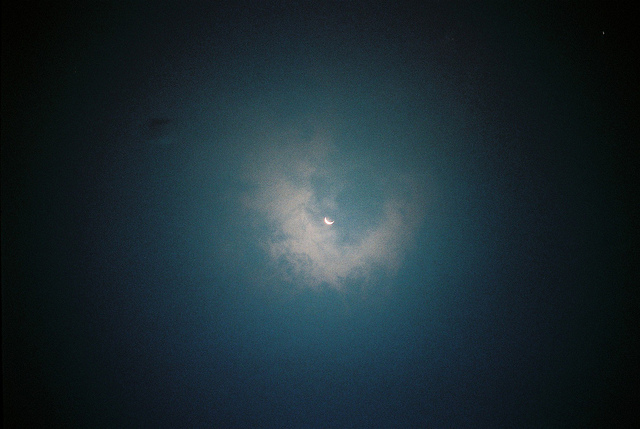
Given the cloudy conditions here in Lebanon and to those who can’t take the safety precautions and those who want to watch the total eclipse (not 18% as in Lebanon):

Watch the solar eclipse live through

Tomorrows Solar Eclipse from Beirut

Standard

I have stumbled upon several posts and discussions on social networks, and some have contacted me about whether the eclipse is visible from Lebanon or not and about the timing.
I am writing this post to address some of your confusions. Here’s a general video from NASA’s Jet Propulsion Lab to start with:

Following is a visualization of the eclipse. The greatest eclipse (totality) occurs above the Faroe Islands, halfway between Norway and Iceland, around 1200 hours Beirut time.
In the visualization below, the strip formed by the two blue curves within which the greatest eclipse occurs is the path of totality. This is the path the shadow due to the moon blocking the Sun’s light from us follows. The further on Earth the observer is from this path the smaller the percentage of the eclipse is observed. Read on for more details.

Continue reading

Video of laser flash on Martian rock (NASA)

Standard

The sparks that appear on the baseball-sized rock (starting at :17) result from the laser of the ChemCam instrument on NASA’s Curiosity Mars rover hitting the rock.

ChemCam’s laser zapping of this particular rock was the first time the team used Curiosity’s arm-mounted Mars Hand Lens Imager (MAHLI) camera to try and capture images of the spark generated by the laser hitting a rock on Mars. Their efforts were a success.

The video is compiled from single images from the MAHLI camera, taken during the 687th Martian day, or sol, of Curiosity’s work on Mars (July 12, 2014).

Since Curiosity landed in Mars’ Gale Crater in August 2012, researchers have used ChemCam’s laser and spectrometers to examine more than 600 rock or soil targets. The laser itself has been fired more than 150,000 times. The process, called laser-induced breakdown spectroscopy, hits a target with pulses from the laser to generate sparks, whose spectra provide information about which chemical elements are in the target. Multiple laser shots are fired in sequence, each blasting away a thin layer of material so that the following shot examines a slightly deeper layer. In this case, “Nova” displayed an increasing concentration of aluminum as a series of laser shots from the rover penetrated through dust on the rock’s surface.

source: NASA Rover’s Images Show Laser Flash on Martian Rock

Three Supermoons in a row (Science@NASA)

Standard

This month as well as the following two months will have three consecutive supermoons. The exact dates and (rise) times (Beirut time) of these supermoons are as follows:

  1. July 12 @ 1940
  2. August 10 @ 1906
  3. September 9 @ 1904
 But what are supermoons?

Supermoons are moons that happen to be at a point of their orbit whose distance is the shortest to Earth. That is they happen to be closest to Earth.
This particular (close) point of the orbit is called the “perigee” thus the scientific term for a supermoon is the “perigee moon“.

Some people have linked supermoons with natural disasters such as tsunami’s like the 2011 tsunami that occurred facing the coast of Japan which destroyed the Fukushima nuclear power plant and the 2004 tsunami that hit the Indian ocean since they occurred in a 1-2 week period within a supermoon.

Scientifically no evidence has been found in this regard. For a detailed explanation check the Berkeley Seismological Laboratory Outreach Program FAQ “Can the position of the moon or planets affect seismicity?” under “Common Myths and Misconceptions”.

Beware of the comming supermoons… whooo!