Given the cloudy conditions here in Lebanon and to those who can’t take the safety precautions and those who want to watch the total eclipse (not 18% as in Lebanon):
Watch the solar eclipse live through

Given the cloudy conditions here in Lebanon and to those who can’t take the safety precautions and those who want to watch the total eclipse (not 18% as in Lebanon):
Watch the solar eclipse live through
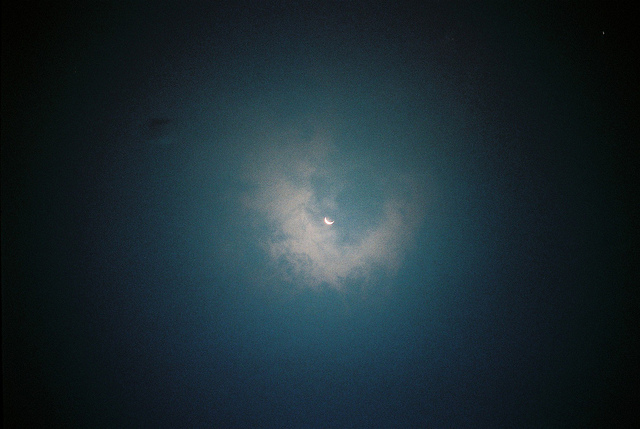
I have stumbled upon several posts and discussions on social networks, and some have contacted me about whether the eclipse is visible from Lebanon or not and about the timing.
I am writing this post to address some of your confusions. Here’s a general video from NASA’s Jet Propulsion Lab to start with:
Following is a visualization of the eclipse. The greatest eclipse (totality) occurs above the Faroe Islands, halfway between Norway and Iceland, around 1200 hours Beirut time.
In the visualization below, the strip formed by the two blue curves within which the greatest eclipse occurs is the path of totality. This is the path the shadow due to the moon blocking the Sun’s light from us follows. The further on Earth the observer is from this path the smaller the percentage of the eclipse is observed. Read on for more details.
Some quotes from “Surely You’re Joking, Mr. Feynman!” talking about university education in Brazil:
After a lot of investigation, I finally figured out that the students had memorized everything, but they didn’t know what anything meant.
I didn’t see how they were going to learn anything from that. Here he was talking about moments of inertia, but there was no discussion about how hard it is to push a door open when you put heavy weights on the outside, compared to when you put them near the hinge – nothing!
Finally, I said that I couldn’t see how anyone could be educated by this self-propagating system in which people pass exams, and teach others to pass exams, but nobody knows anything.
website: http://www.strandbeest.com/


You must be logged in to post a comment.