Attending the PhD Summer School on Remote Sensing for Wind Energy at the Institute of Wind Energy at the Denmark Technical University (DTU Riso) in Roskilde, Denmark.
Day 1 focused on LIDARs. It included a walk to check out the historical met mast and a view of the wind turbines (see images).
The ocean is a complex system as a result of coupled forces arising from fluid dynamics. This coupling of the difference forces in the ocean (currents, surface and internal waves, swell, etc…) and the rotating Earth result in a sea surface with complex features obscuring the depths of the ocean.
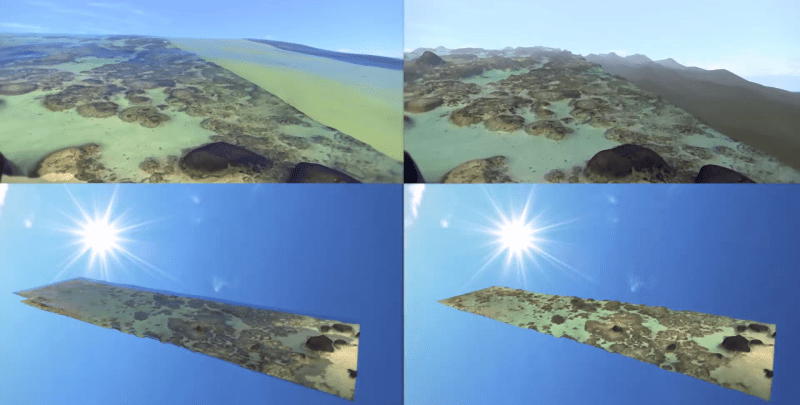
Utilizing machine learning NASA AMES research scientist Ved Chirayath devised a method called fluid lensing to reduce and make these effects almost negligible. This resulted in a fluid cam capable of peering down to a depth of 10 meters which makes it very useful for studying coastal and coral systems.
I quote from NASA’s website:
So far Fluid Cam, the imaging instrument that carries the fluid lensing software, has flown only on a drone. Someday, this technique could be flown on an orbiting spacecraft to gather image data on the world’s reefs.


 Ibrahim El Merehbi
You must be logged in to post a comment.